
When Reality Shifts: The Unmapping by Denise S. Robbins

Many episodes of The Twilight Zone centre on a crisis that is, to all appearances, impossible. In one episode, a man enters a small town with no memory of who he is or how he got there, and, despite evidence of habitation, can’t find a single other person. In others, characters wake up in false realities, or find that nobody remembers them, or believe that an irrational fear is about to become true. The sense that a nightmare has thrust itself upon the character is what makes these stories work: not only did he do nothing to cause the crisis, but it is beyond his understanding. How does he solve something that can’t make sense?
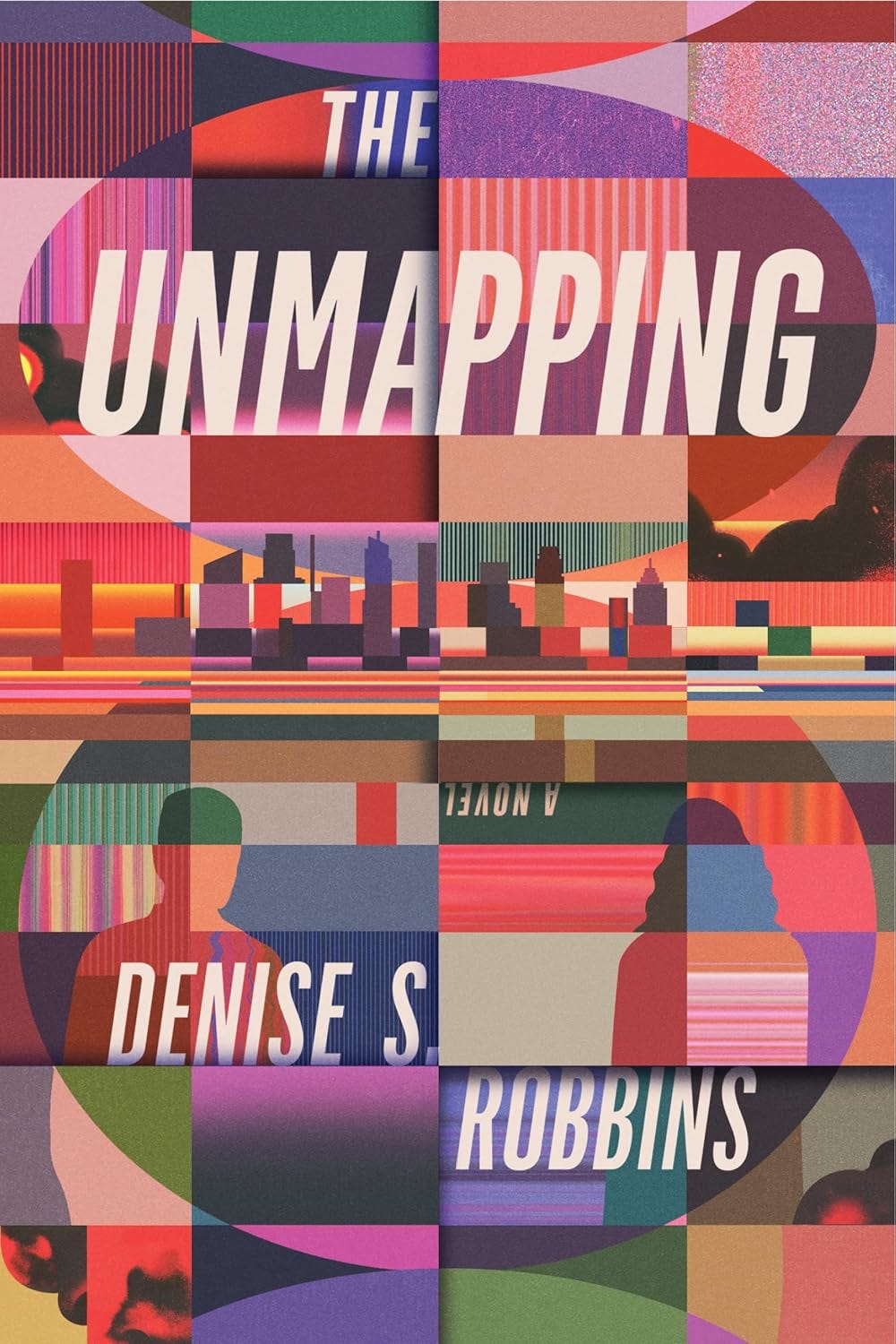
The Unmapping, the debut novel by Denise S. Robbins, poses just this question. It thrusts its characters into an unthinkable scenario, where the stakes are high, and nobody really knows what’s going on. There are missing persons, affairs, panic attacks, and conspiracies, all through the eyes of characters we get to know intimately. And it handles what could have been disposable pop fiction with a real writer’s eye, adding depth and ambiguity in ways that elevate the book to a high level.
The plot centres on “the Unmapping,” an event whereby a city literally rearranges itself overnight, and then every night, with no immediate explanation and no obvious way to make it stop. It begins in a small town, but is really set in New York City. Once the event happens, gas lines explode, people become lost, and a child is stuck in a basement whose location keeps shifting. Every night, the city is rearranged, sometimes with amusing results, and other times with disastrous results. The central mystery is about what caused the Unmapping and whether it can be stopped, but the novel takes a panoramic view of this. It follows a variety of characters, many unnamed, as they adapt to their new environment and discover new possibilities and horrors.
Many of these characters appear simple at first, but become complicated later on. Arjun, one of the two central players, is perhaps the clearest example: In the beginning, he wants to help people; he wants to do good in the world. It’s naive and childish, but good-natured. As the book progresses, this single-minded obsession, through its repetition, starts to look more like narcissism. Who is Arjun to change the world? The writer never resolves this tension, which is to her credit. Arjun is one and both of these things. He’s also quite annoying, which feels intentional, and possesses an irresponsible streak.
Esme is less complicated than Arjun, which is a shame. She’s a Good Person who wants to do Good Things, such as staying up for three nights to keep helping people, and not asking for overtime pay. Adding a layer of self-love to her would have made her much more interesting, but maybe that’s not the point. She’s like a heroine from the movies: moral, courageous, with the only flaw that she loves too much.
Much of the book is quite ambiguous, even regarding its central question: How did the Unmapping happen? Early on, it’s suggested that global warming is somehow involved. But the mechanism behind this is kept mysterious: different characters have different ideas, and Robbins wisely builds up and then undermines their credibility. One character, a man named Franz, is presented as a holy man who may know of secrets from beyond. But another character’s perspective reveals him as a crank and almost certainly psychotic. His followers, too, are either believers who’ve found a genuine spiritual figure or dangerous terrorists. They have their own explanation for what caused the Unmapping — but who are we to believe?
And what about the genre? In the beginning, The Unmapping appears as a kind of thriller: an explosion, chaos, an intriguing mystery. But its focus is largely interior. We get deep dives into how characters perceive themselves and the world, what they desire, and where they come from. There are also hints of magic realism, and although Robbins name-checks Kim Stanley Robinson in the acknowledgements, there’s little in the way of science fiction, although that’s present as well. Just taking the Unmapping as an event, we, at various times throughout the book, could have a natural explanation (global warming), a supernatural one (caused by dreams), or no explanation at all. Because the book is comfortable with all or none of these, it sits between genres, adding another layer of ambiguity and complexity where a traditional genre work would collapse this.
There are moments of excessive backstory and long sections where relationships are gone over in minute detail, which slow the pace down, and not always in a good way. Focusing on interiority is welcome, but there are moments, especially in the opening pages of a new chapter, where the information feels skippable. No doubt this leads to a greater sense of intimacy with the characters, but the cost is too high. Many readers will likely skip those sections anyway, or at least skim them, so whatever intimacy they may have provided will be lost via the reading process.
While it may take some creative reading and the patience to get through moments of excess, The Unmapping is a book of real pleasures. It’s thrilling, dramatic, ambitious, and often surprising. In a lesser writer, this concept and its attending themes would have produced a disastrous novel. But Denise S. Robbins is a writer of skill, and she handles the material well. She understands the characters and the world with astounding intimacy, and writes with a voice and personality that the work constellates around.
An admirable, interesting novel that deserves to be read.
Adam Hunter is a writer out of Toronto, Ontario. His work can be found at Trembling With Fear and Carnage House.
Denise S. Robbins is from Madison, Wisconsin, where she grew up and returned to after sixteen years living and working in climate activism on the East Coast. She lives with her husband in a yellow house circled by oaks and pines and two owls. Her stories have been published in literary journals including Barcelona Review, Gulf Coast Journal, and more.
You can purchase “The Unmapping” here.
Thanks for reading! If you are an author with a book you would like to have reviewed, or a reviewer who would like to review a book by a Substack author, or better yet, BOTH, you can learn more about how to get involved, by visiting:

NOTE ABOUT BECOMING A PAID SUBSCRIBER: In addition to contributing to the fund that will allow reviewers to start getting paid for their work, yearly paid subscribers will also get reviews of their books prioritized (limit two books per year).
 | A guest post by
|
This sounds great. Going to check it out